
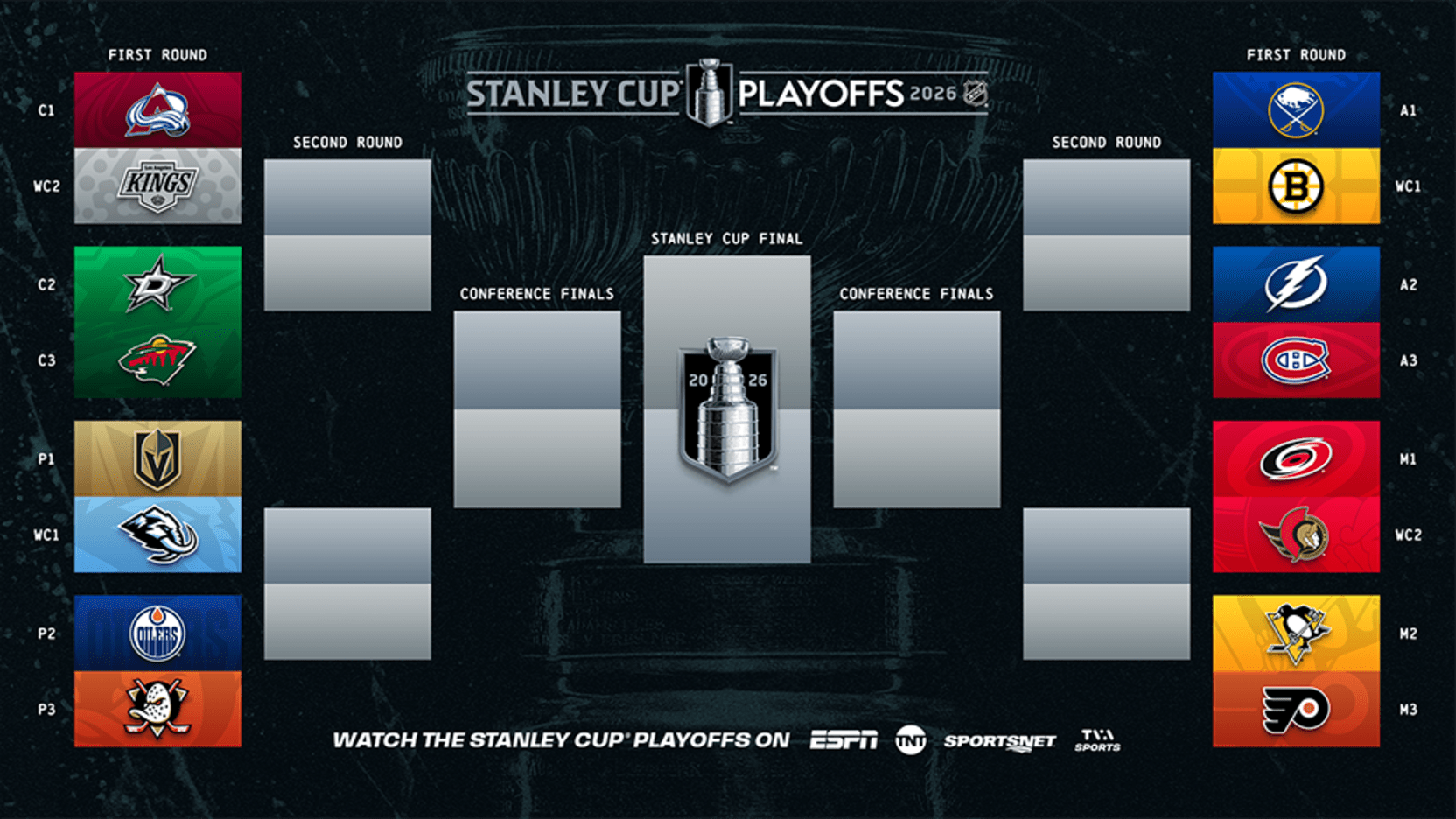

A little under a year ago, we launched our Team Blueprints and Matchup Engine as our main tools for team-level analysis. We took this opportunity to try to identify what would be the key areas defining the upcoming second round of those playoffs.
And now we have the chance to repeat this exercise for Round 1 of this season which, in my opinion, is shaping up to be way more interesting than last year’s series in large part due to some old rivalries returning, tighter competition, and the league’s playoff format doing some weird stuff. So let’s boot up the Matchup Engine and get to work.
As indicated in the dashboards, data comes from the NHL API and Corey Sznajder’s AllThreeZones Project (AllThreeZones.com)
The Great Return

BUF’s Key Area: Kickstarting Transition Offence from the Breakout
At long last, the Sabres are back in the playoffs. As a Sens fan born in 2001, my first memories of NHL playoff hockey were those heavyweight bouts between Ottawa and Buffalo, so I could not be happier for them to be making their return. Even better, they are doing so while boasting one of the most exciting teams in the league this year.
Buffalo oozes pace thanks to their fast & tenacious forward group that works extremely well with superstar Rasmus Dahlin and their highly-skilled top 4 defencemen. This has helped them drive some truly dynamic offence, which has resulted in the league’s best goal-scoring numbers since the first week of December. This is echoed in our linked expect goal model with the AllThreeZones data, as Buffalo ranks 2nd in the league for Rush Offence and Entry Efficiency, meaning they consistently enter the offensive zone with possession and often generate chances off said entries.
Boston has similarly strong offensive transition metrics and even tops our data for limiting rush chances against, which could give the Sabres some heavy resistance. But the separation lies in their breakout ability. On the backs of those aforementioned skilled dmen in Dahlin, Owen Power, Bowen Byram, and the continued improvements of Mattias Samuelsson, BUF has leveraged that puck-moving prowess to get out of their zone cleanly and consistently. Against a somewhat weak Bruins forecheck, this should allow them to kickstart more transition plays and leverage this roster’s strength as much as possible.
BOS’s Key Area: Diversifying the Offensive Portfolio
Due to this disparity on each team’s forechecks and breakouts, Boston is not as likely as they’d hope to outnumber Buffalo’s transition chances, despite being quite strong in that aspect too (both in terms of efficiency and danger). Their excellent rush defence could give them enough of an edge to counter Lindy Ruff’s group, but I believe their path to victory is apart from the rush entirely.
The last few years have cemented how integral extra offensive dimensions are to a team’s success in the Stanley Cup Playoffs. And while the Bruins don’t need to emulate Florida’s forecheck or Colorado’s cycling threat, they have shown to offer a good bit of diversity with how they create up front. The rush is their greatest strength there sure, but they rank in the top half for both forecheck and cycle chances as well this year. Tack on Buffalo’s dip in defending ability when looking at those two situations, and there’s some room for the hope of a Bruins upset.
Experience vs Youth

MTL’s Key Area: Embrace A Volatile Rush Game
Dallas-Minnesota is being marketed as the most highly-anticipated matchup of round 1, but this is the series I personally had the most difficulty with when filling out my bracket. Both have dynamite offensive pieces, Selke candidates, high-scoring defensemen, strong starters, and excellent head coaches manning the bench. It’s an incredible duel of experience vs youth. And that is exactly where Montreal can look to gain an advantage.
On the shoulders of their explosive first line, the Habs have built one of the most exciting young contenders in the NHL. As it’s been shown with their success in overtime, this team thrives when entering the zone with speed. Whether it’s through Hutson’s shiftiness, Suzuki’s smarts, Demidov’s pace, or Caufield’s pure shooting ability, they can turn entries into goals at a phenomenal rate. Should they want to maximize their opportunities in doing so, they’ll look to open up the game and increase its volatility. It will definitely result in some chances coming back the other way too, but if it means they play like they have when coming back in games this season, playing to their strengths this way will be worth it.
TBL’s Key Area: Defence at Every Level
Looking at the Matchup Engine for this series, Tampa seems to have a slight edge. However rather than in specific situations, it’s through multiple small advantages. The one big discrepancy is their penalty drawing against MTL’s discipline, but that same tilt is present the other way, along with fairly close special teams to neutralize any significant upper hand there. It’s while looking at the lineup that their high ground is made clearer.
The Lightning may have the most balanced slate of defensive ability in the league throughout their lineup. It’s what has driven such strong possession suppression for them, and it starts up front. Yanni Gourde has turned back the clock as a prime shutdown 3C. Pontus Holmberg (health permitting) made the Swedish Olympic team almost exclusively thanks to his defensive game. Anthony Cirelli still has the tools to be an excellent two-way 2nd liner. Even Gage Goncalves & Zemgus Girgensons have outputted near-elite suppression impacts in a tertiary role on the wing.
It doesn’t get any easier on D. Darren Raddysh & JJ Moser have wowed with their “somewhat out of nowhere” scoring bumps this year, but the d-zone play has been nearly as impressive. Ryan McDonagh has seemingly stopped aging and combines with Erik Cernak for a suffocating 2nd pair. Jon Cooper has continued to work his magic by turning Charle-Édouard D’Astous from an unknown into perhaps the most underrated modern two-way dman out there. And if you can somehow bypass all of this, you’ll need to beat Vezina favourite Andrei Vasilevskiy (and a potential Hedman return too). Overall, Tampa Bay has the defensive layers to safeguard leads against a Montreal team that is very capable of doing some damage when down a goal.
Analytics Darlings

CAR’s Key Area: Lean on Your New Additions
As per usual, the Hurricanes come in as favourites within the Metro path, with an expectation to make the conference finals thanks to some truly absurd play-driving numbers. But it isn’t only through a total team defensive buy-in and Rod Brind’amour’s trademark suffocating forecheck intensity this time. Carolina has developed offensive layers to a level that this core hasn’t quite experienced yet, and that is due to their new additions throughout the lineup.
They made a big splash by signing one of the league’s most threatening rush players in Nikolaj Ehlers last summer, who is scorching hot since the Olympic break. Logan Stankoven & Taylor Hall were brought in at last year’s deadline to weave in more speed, shiftiness, and puck-carrying ability. Sean Walker & Shayne Gostisbehere were recruited the summer before and have excellent offensive transition impacts themselves. All of these skaters have injected some real juice into CAR’s rush game, even making them the most dangerous team in the league on entries in our dataset.
It takes time to fully integrate yourself in Carolina’s specific system, but now that these players have, they’ve been able to contribute both through teamplay and individually with their signature dynamic skills. And if they can keep that momentum into the playoffs, that’s a scary combo for any opponent to handle.
OTT’s Key Area: Don’t Force the Series into a Possession Battle
Against almost any other team, the Senators would be the favourites to control play. This roster’s ability to establish sustained pressure in the offensive zone and especially limit their opposition from doing the same has been extraordinary. Few teams can hope to match Carolina’s possession game, but the Sens have shown time and again this season that they can be as stingy as necessary. However, I don’t know how reliable a strategy it will be to replicate the Hurricanes’ play style and beat them at their own game. As a team who has been primarily reliant on the cycle to generate chances, they’ll need plenty of o-zone time to make this approach worth it, which the Canes seldom allow. So where do they gain their edge?
Before the Olympic break, I talked about the disconnects within Ottawa’s playstyle and what needed to change for them to not only sneak into the playoffs but contend moving forward. And the Sens have definitely improved in those areas. The two-way transition game has recovered and stopped constant late-game collapses, the penalty kill has been top-5 league-wide since Mike Yeo took it over, and the forecheck is generating goals rather than just recoveries. That last point is especially important given Florida’s playoff success in recent years over Carolina, as their offensively potent forecheck overwhelmed the Caniacs.
Now that Linus Ullmark seems to be back on top of his game too since his return, even going so far as stealing 3 wins and choking away none over the last month, everything is moving in the right direction for Ottawa. If they can compound all these little advantages, they might have a shot at making it through Raleigh.
Battle of Pennsylvania

PIT’s Key Area: Offence by Committee
The Pittsburgh Penguins are not getting the respect they deserve in my opinion. The roster may not have much flash outside of their strong but aging core. And yet they have turned what was supposed to be the only lottery contender in the East at the start of the season into a legitimate playoff threat. The trio of Crosby, Malkin, & Karlsson were the big drivers of this success, all ranking as top 40 players on our side of things in 2025-26. But what’s been especially impressive is how the rest of the roster has maneuvered through injuries to those big names. Anthony Mantha’s resurgence, Ben Kindel’s rookie surprise, and Egor Chinakhov’s mid-season trade have helped spread the load.
This has amounted to some truly fantastic offensive marks being set both individually and at the team level. The Penguins have five 60-point scorers this season, and seven if you include Rakell & Chinakhov, who were well on pace to hit that mark over an entire season in Pittsburgh. They’ve also got four defencemen who crossed the 30-point mark, including surprises such as Ryan Shae & Parker Wotherspoon. This has led them to becoming a top-3 team in terms of cycle, forecheck, & overall chance creation, along with a top-5 powerplay threat. Dan Muse has done an outstanding job here, and all of the above is why he’s my pick for Jack Adams this season.
PHI’s Key Area: Martone Magic
The Flyers are a strong defensive team, but shutting down such a deep scoring lineup is a really tough task. And when looking at their “with puck” side of the Matchup Engine, it’s tough to find a path to victory. But it’s precisely what’s missing from the data that gives Philadelphia an unseen edge.
Plenty has been said about the turnarounds that Philly’s coaching staff have engineered this season: from Trevor Zegras rediscovering his swagger, to Christian Dvorak bouncing back as a strong middle-six centre, and Dan Vladar becoming one of 2025-26’s top 10 goalies. Luckily for them, there are more potential breakouts lurking, ready to strike that aren’t being accounted for in our metrics. The first and most obvious one is Porter Martone. His 9-game stint with the Flyers has been a revelation, and may just be the extra offensive catalyst they’ve needed. His dual-threat power game has garnered 4 goals and 10 points so far, along with four 5+ shot outings. Tyson Foerster has also returned from injury and is another important top-6 piece that brings shutdown acumen and goal-scoring potential.
Both Martone & Foerster are two of Philly’s 5 forwards who have averaged 17+ minutes a night this season. And yet, they’ve only got 9 & 29 games played respectively. Tack on a half-season missed from Rasmus Ristolainen, and you’ve got some important parts to this Flyers lineup that have been obscured from the majority of this season and undersell this team’s pre-scout data.
The uhhhhh… oh god.

LAK’s Key Area: Do Not Be Afraid to Roll Out Forsberg
I apologize in advance to Kings & Avs fans because I do not have much to say about this series. We have one of the league’s best team seasons in the last few years against one who finished bottom-3 in regulation wins. So what can Los Angeles do to maximize their odds of pulling off an upset? The only answer lies in the most volatile area of the game: goaltending.
Outside of a down year in 2023-24, Darcy Kuemper has had a strong track record post-Covid. But this season has just been a weird one. A record of 19-14-15 is such an extreme spread that I didn’t believe it initially upon seeing it. Anton Forsberg has been arguably a top 2 backup in the league per our model this season, right next to whichever one of the Wild goalies you choose as the #2 there. Forsberg’s 8 stolen games is second amongst all backups, and his +5 steals-to-chokes differential ranks third, really highlighting his game-breaking ability this season. In a situation where you just have to hope to get lucky and ride the hot hand for only 4 wins, this may be LA’s best and only path.
COL’s Key Area: Don’t Overcomplicate It
This is a cop out answer, but the Avalanche simply dominate in each area above. With the puck, LA is unable to surpass Colorado’s same-situation defence at every single metric we measure. This is the only series where that’s the case. COL is also the best offensive team in the league, can move the puck outside of their own zone and into the opposition’s with remarkable efficiency, holds the best PK%, and has seen improvements to their powerplay with Kadri returning at the deadline.
The task is simple: just keep playing your game and don’t complicate things to put yourself in a situation where you’ll have to overexert yourself. The real test comes in round 2, which speaking of…
The Marquee Matchup

MIN’s Key Area: Attacking Dallas’s Breakout
I can’t believe this isn’t round 2 or 3. All eyes will be on Dallas & Minnesota to provide one hell of a show in the Central’s opening series. These teams already hate each other, and that should just be more fuel for this upcoming inferno. Despite still being strong on both sides of it, Minnesota’s season breaks down into two parts: before and after Quinn Hughes. It’s why a lot of pundits give Minny the edge as their play & resulting numbers spike up to potentially catch or surpass Dallas following the acquisition. They sport a top-3 cycle offence thanks to the injection of Hughes’s passing game meshing with the growth of partner Brock Faber, and talent level of “do it all” wingers Kirill Kaprizov & Matt Boldy.
In order to maximize their offensive zone time and sustain this cycling advantage, the Wild should look to put Dallas’s breakout on their heels. The Stars’ defensive depth has been a point of weakness in recent years, especially with Heiskanen’s injury (he should return for game 1) and Harley’s down year. Adding Tyler Myers brings some size to the back-end, but it doesn’t do much to improve the team’s poor breakout rate.
Minnesota seemingly prepared for this by acquiring Bobby Brink, Nick Foligno, and Michael McCarron at the deadline who are all excellent forecheckers, both in terms of disrupting clean exits and recovering loose pucks. If they can focus on this area by pinning Dallas in their own end and stopping breakout attempts, thus extending offensive zone cycles, then the Wild will truly be leveraging their strengths.
DAL’s Key Area: Improving Time on Attack with Entries
With all the talent they harbour on their roster, it’s impressive that Dallas ranks so low in offensive possession and sustained pressure generation. The answer is probably just because they simply don’t need that much time to be effective. Throughout the season, the Stars have continuously succeeded in creating a great amount of chances at 5v5 despite not spending a ton of time in the o-zone. A lot of that can be attributed to their skill in transition setting themselves up for success, and their forecheck being incredibly efficient at turning their recoveries into scoring chances. Jason Robertson epitomizes this by being one of the best F2/3 in the league as he might not have crazy peripheral numbers, but thrives in small areas to advance plays and is a deadly catalyst.
As we said however, Minnesota would benefit greatly from this tilt of time on attack since they are such a strong cycle team. To minimize that, Dallas should lean on their strong zone entry efficiency to continue setting up more o-zone possessions. This is an area in which the Wild defence has faltered this season, potentially due to a smaller top 4 and just fine 1v1 shutdown pressure. The same additions we talked about that could help Minnesota are also a point of concern due to their penchant for taking penalties, which could give Dallas’s top 2 powerplay a chance to feast against a league-average PK.
Clawing back on Minnesota’s cycle minutes, both through taking away 5v5 time and commanding an efficient zone entry game, will be key for the Stars to take this heavyweight bout.
Former Desert Rivals

VGK’s Key Area: Tortorella Rush Defence Bump
Utah is a tough draw for Vegas in the first round, and definitely not what you’d hope as a division winner given the strength of the second and third seeds within the Pacific this year. But despite slides, step-backs, and injuries, VGK found itself at the top of the division come end-of-year, and that counts for something. The most notable turning point moment is John Tortorella, as the Knights are 7-0-1 since his hiring.
The biggest improvement in Vegas’s play to drive this success recently has been in defending the rush. They were already an above-average group in terms of denying entries, but the carries that did leak through often turned into high-danger chances against, resulting in a bottom-2 rush defence score. But under Torts, there have been signs of improvement, which will be necessary to prevent Utah’s dynamic forward corps including Keller, Guenther, Cooley, & Peterka from feasting in transition as they have all season.
UTA’s Key Area: Dial in the Discipline
I know that the NHL technically treats them separately, but it’s so nice to have the Arizona/Utah franchise back in the dance. And while their point totals might indicate that they’ve simply squeaked in, the underlying metrics on them signify otherwise. The Mammoth are top 10 in our data for all five offence and all five defence metrics at 5v5, simply outstanding stuff to have such a strong diverse two-way game. This doesn’t leave them a lot of room for specific improvements aside from just “keeping it up”.
Similar to Dallas in a way, Vegas doesn’t seem to match their expectations in certain offensive categories, given the skill they have up front. Somehow, their expected goal rates both on the rush and forecheck are bottom-2. And I do wonder if some of this can be attributed to most of this talent being condensed into the playmaking bucket. Eichel, Stone, Marner, and Barbashev are all pass-first players (Hertl sometimes too), which leaves Pavel Dorofeyev as the lone sniper and 30-goal scorer this season. This would make sense given how potent their powerplay has been, where you can rely on more complex passing plays leading into an easier final shot to score.
With Utah’s discipline grading out as their worst score on either side of the puck, focusing on minimizing these potential powerplay opportunities where Vegas shines should be enough for the Mammoth to gain an important upper hand. That’s especially the case with the Golden Knights’ nearly league-leading penalty-drawing ability.
All Gas, No Brakes

EDM’s Key Area: Overwhelming Puck-Moving
We’re finishing with what might be the simplest keys to victory of any matchup here so I’ll keep it brief. Despite a bit of a down year by their standards, the Oilers still pose a high-level threat on the puck-moving side. Not only do they own the top zone entry efficiency spot in our rankings, but for exits as well. While the Ducks have some good skaters on D and have added experience pieces in the last couple years, they still have trouble defending this area of the game. Now make them face an Art-Ross-inning McDavid campaign, Evan Bouchard’s best season, and the upcoming return of Leon Draisaitl and the Oilers should have as open a path as you’d hope for through the neutral zone this series.
Applying this puck-moving on the league’s best powerplay gives them another avenue to stretch and pick apart Anaheim’s defensive schemes. If Edmonton can just draw a few more penalties and convert on a couple extra rush chances than they have this season, a series win should be solidly attainable.
ANA’s Key Area: The Finishing vs Goaltending Battle
Anaheim has some extremely exciting offensive pieces. From Leo Carlsson’s scorching start, to Cutter Gauthier’s 40-goal season, and Beckett Sennecke’s 60-point rookie campaign, the Ducks have been an extremely fun team to watch. It’s just hard to imagine them “out-fire-powering” Edmonton’s top guns in a seven-game series. But one position makes this possible: goaltending.
The Oilers’ goalie woes have been a primary media talking point for years now, and it might currently be at its lowest point. The Jarry trade has aged like milk and forced them to hand the reins to Connor Ingram, who has been just ok this year. Meanwhile, the Ducks have a weapon in net with Lukas Dostal. On the whole, his season has been good but not great. However, his game-breaking ability is outstanding: hitting the 8-stolen-games mark for the second year in a row. They’ll need to rely on this for a potential round 1 upset. Tack on Edmonton’s subpar finishing this season, along with how efficient Anaheim’s catalysts have been with their chances, and this possibility may be more likely than it seems.

All that being said, here is my bracket heading into the playoffs. Once again, you can find the glossary for the Matchup Engine here, and gain access to the dashboard along with the rest of our vast suite of hockey analytics tools by subscribing here. Happy Round 1 everyone!